

Sewer Cleanout Cap: How to Find Your Sewer Cleanout in Myrtle Beach
Sewer cleanout cap: where to find it on a Grand Strand home, what it looks like, how to open it safely and when to add one.
Your sewer cleanout cap sits on a short pipe, commonly 4 inches across, that opens straight into the main sewer line. On a Grand Strand home, look outside near the foundation on the side facing the street, then near the property line, where GSWSA’s standards call for one on newer service lines. If the cleanout is buried, broken or missing, Myrtle Beach Sewer Line Repair can find the line with a camera and repair or add one.
Call (843) 429-6659 to have your sewer cleanout found, repaired or added.
Call nowWhere is my sewer cleanout?
Check outside first: along the foundation on the street side, usually within a few feet of the house, and near the property line by the street. If you find nothing, look in the garage floor, at the bottom of the drain pipes under a raised home, or behind an access panel near a toilet.
Near the property line
GSWSA’s Sewer System Standards (July 2026) call for cleanouts on a service lateral at the property line next to the sewer main, 5 feet from the building, at every bend sharper than 45 degrees and at least every 75 feet on straight runs. GSWSA also marks new wyes, tees and laterals with a green-painted 4-by-4 treated post, so on a newer lot a green post near the street can point to the line.
In Murrells Inlet, GCWSD’s standard connection detail shows a 6-inch cleanout in the road right-of-way, set in a round concrete collar about 27 inches across, plus a 4-inch cleanout at least 5 feet from the house. The cities of Myrtle Beach, North Myrtle Beach, Conway and Loris run their own sewers, so ask your city whether a property-line cleanout is standard on your street. Older homes may predate all of these rules.
Near the house
The residential code South Carolina uses (the 2021 IRC) calls for a cleanout where the building drain meets the building sewer, or within 10 feet of that junction. Outside, that usually means a short pipe in a flower bed, behind shrubs, beside the front steps or under a deck.
Slab, raised, manufactured and condo homes
- Slab homes: the drain runs under the slab and leaves at the foundation, so the cleanout is usually just outside that wall. Some homes have another in the garage floor, with a flush plug, or behind a wall access panel.
- Raised homes and homes on pilings: the drain pipes run under the floor and drop to the ground. Look for a capped fitting at the bottom of the drop or on the pipe heading toward the street.
- Manufactured homes: the drain usually leaves the underside of the home at one point inside the skirting.
- Condos and townhomes: in buildings with many units, cleanouts and the shared sewer line are often common property, so check with your HOA or property manager before opening one.
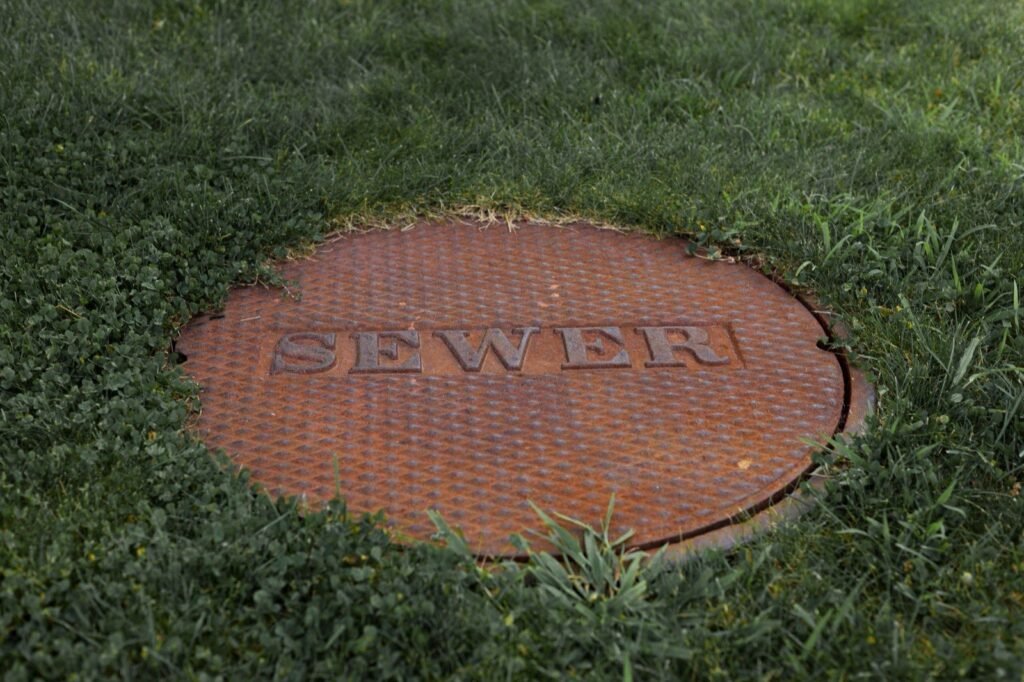
What does a sewer cleanout cap look like?
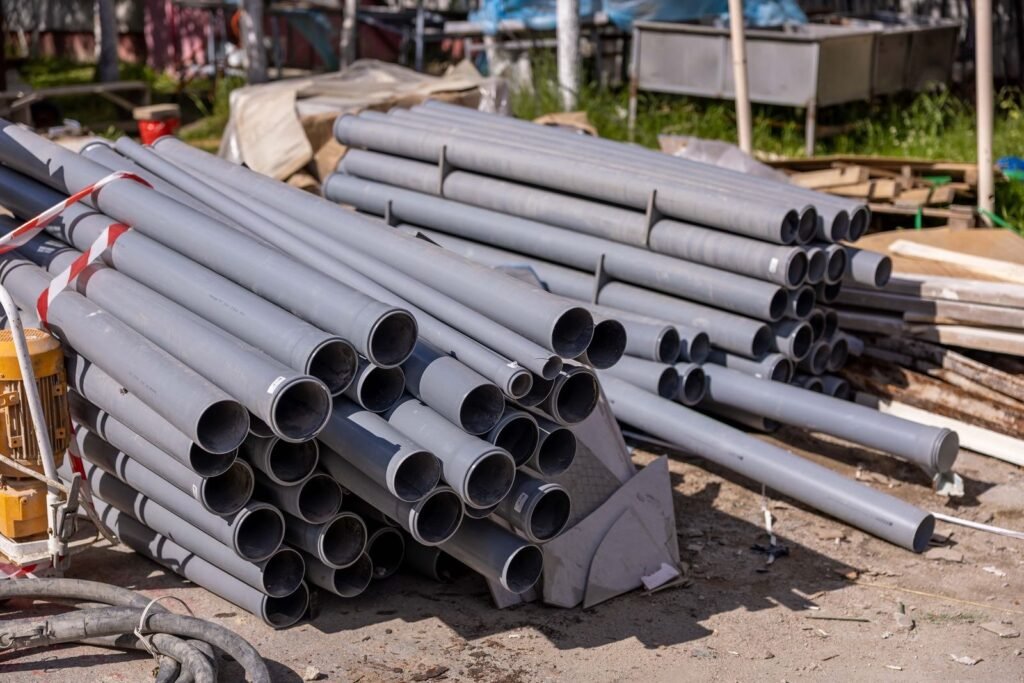
A sewer cleanout cap is a round, threaded plug, usually white PVC or black ABS on newer homes and often brass on older cast iron lines, with a raised square nub or a recessed square socket for a wrench. The 2021 IRC lists cleanout plugs as copper alloy (brass), plastic or other approved materials.
Cleanouts match the pipe they serve, so house cleanouts are commonly 4 inches and some indoor ones 3 inches; GSWSA’s standard lateral for a single home is 4 inches. A two-way cleanout has two caps side by side, or one fitting that opens both ways, so the line can be cleared toward the house and toward the street. Where vehicles can drive over a cleanout, the code calls for a traffic-rated assembly, often under a metal cover.
| What you find | What it is | What to do |
|---|---|---|
| Short white or black pipe with a threaded cap near the foundation | House cleanout | Keep it uncovered and the cap snug |
| Cap set in a round concrete collar near the street | Property-line or right-of-way cleanout | Call your utility if it is damaged |
| Lid with a water meter or valve inside | Meter or valve box, not a cleanout | Close it and keep looking |
| Green-painted 4-by-4 post near the street | GSWSA marker for a newer lateral | Look for a cleanout nearby |
How to open a sewer cleanout cap safely
Opening a cleanout is safe if you expect pressure and gas. Wear gloves and eye protection, loosen the cap slowly while standing to one side, and keep flames away. If the house drains are backed up, sewage may push out the moment the cap breaks loose.
- Check the drains first. If sewage is backing up and you are in a GSWSA area, call GSWSA at (843) 234-8460, or (843) 443-8200 after hours, before opening anything. GSWSA investigates backups at no charge.
- Use the right tool: a wrench on a square nub, or a square drive in a recessed plug. Turn counterclockwise, slowly.
- Do not force a seized plug. Never heat it with a torch, and do not hammer on an old cast iron fitting, which can crack. Call us instead.
- Let gas clear. Step back for a moment after the cap comes off, and get fresh air if you feel dizzy.
- Read the water level. Standing water means the blockage is downstream, toward the street. A dry cleanout while drains back up means the clog is between the cleanout and the house. Our guide to a main sewer line clog covers what to do next.
- Never pour drain chemicals into a cleanout, and never mix drain products.
- Put the cap back snugly. An open cleanout lets sewer gas out and rainwater in.
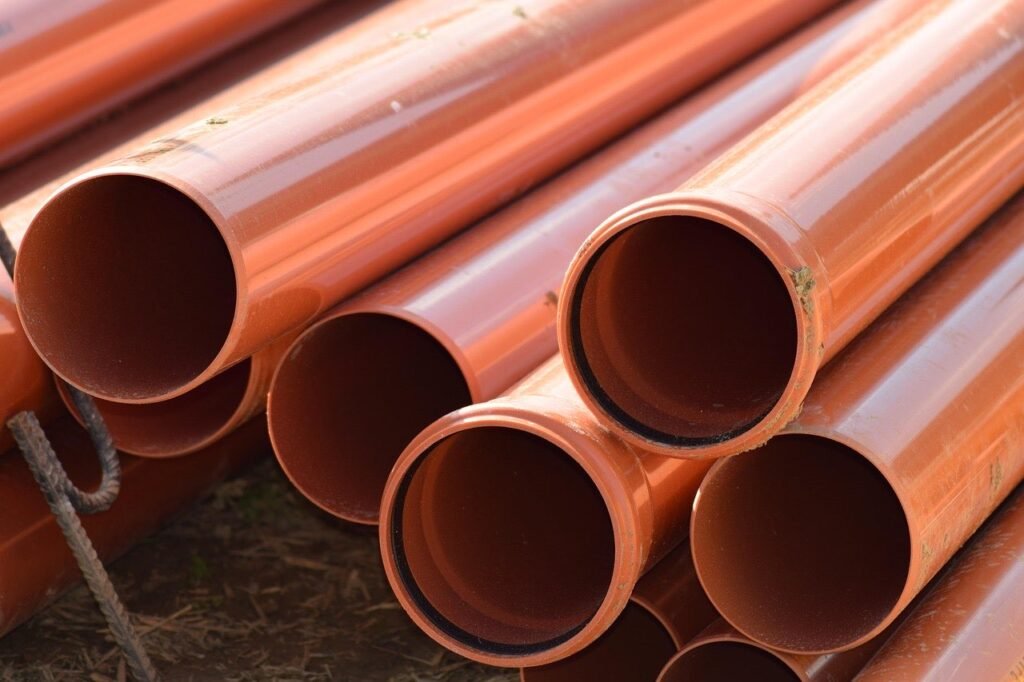
What if the cleanout is missing, buried or broken?
Replace a missing cap or cracked riser soon, find a buried cleanout with a camera locator, and add one if there is none. Until then, cover an open pipe so rain, debris and pests stay out.
- Missing cap: a matching threaded plug, or a temporary rubber test cap, closes it until a proper repair.
- Broken riser: lawn mowers and vehicles commonly crack the short pipe above ground. It can be cut back and fitted with a new riser and cap.
- Buried cleanout: brush back mulch, sod or gravel by hand along the foundation. Anything more is digging, so call 811 first. SC811 marks only public utility lines, not your private sewer line, and operators have three full working days to respond. The code calls for below-grade cleanouts to be extended to grade and says plugs may not be covered with mortar, plaster or other permanent material.
- Cannot find one: we run a camera with a locator into the line from inside, through a pulled toilet if needed, and mark the line’s route and depth on the ground.
- Damaged property-line cleanout: in GSWSA areas this cleanout generally sits where GSWSA’s lateral meets your pipe, so call GSWSA to ask whose it is. Our guide on who is responsible for sewer line repair explains each utility’s split.
When should you add a sewer cleanout?
Add one if your home has no outdoor cleanout, if the line has needed clearing before, or if a repair already has the line exposed. A cleanout near the foundation gives direct access for clearing and camera work without pulling a toilet or working inside the house.
Installing one means digging to the line, cutting in a fitting, often a two-way cleanout, and extending it to grade with a cap. Under South Carolina’s 2021 residential code, replacing concealed pipe is new work that needs a permit and inspection. Plumbing work over $500 needs a state-licensed plumber, though owner-occupants may do their own work. We pull the permit, schedule the inspection and request SC811 locates before digging. More on sewer cleanout installation and repair.
When to call a plumber
- The cap is seized, cracked or missing and you cannot close it.
- Sewage is coming out of the cleanout and your utility has confirmed its line is clear.
- You cannot find a cleanout, or it is buried under concrete or a patio.
Every job is done by licensed plumbers covered by liability insurance. When the line itself needs work, see our page on sewer line repair in Myrtle Beach.
Sewer cleanout FAQ
Where is the sewer cleanout on a house without a basement?
Usually outside near the foundation on the street side, within a few feet of the house. Slab homes sometimes have one in the garage floor, and raised homes often have one at the bottom of the drain pipe that drops from the floor.
What size is a sewer cleanout cap?
It matches the pipe it serves, so house cleanouts are commonly 4 inches and some indoor ones 3 inches. In Murrells Inlet, GCWSD’s standard puts a 6-inch cleanout in the road right-of-way.
What should I do if my sewer cleanout cap is missing?
Cover the opening right away, then fit a matching threaded plug or a temporary test cap. An open cleanout lets sewer gas out and rainwater and debris in.
Who owns the sewer cleanout at the property line?
In GSWSA areas, the property-line cleanout generally marks where GSWSA’s lateral ends and your pipe begins, so call GSWSA if it is damaged. In other areas, ask the utility named on your water bill.
Keep reading
Related guides
Main Sewer Line Clog in Myrtle Beach: Signs, Safe Fixes and Who to Call
Main sewer line clog? How to tell it from one slow drain, what to try safely, snaking vs hydro jetting, and who to call first.
Read guide
Tree Roots in Your Sewer Line: Signs and Fixes in Myrtle Beach
Tree roots in your sewer line? How roots get in, the warning signs, cutting vs jetting vs lining, and how to keep them out.
Read guide
Backwater Valve Installation in Myrtle Beach: Do You Need One?
What a backwater valve does, when South Carolina’s code requires one, slab vs elevated homes, installation and upkeep.
Read guideSewer or water line trouble?
Call to have your sewer cleanout located, repaired or added.
Camera inspection first, written and itemized quotes, and trenchless options where they fit.

Sewer and water line repair for Myrtle Beach, Conway and Horry County. Camera inspection first, written and itemized quotes, licensed plumbers.
Call (843) 429-6659