
Sewer Line Cleaning in Myrtle Beach, SC
Main line clogs cleared properly, with a camera check so the clog does not come straight back.
- Camera inspection first
- Written, itemized quotes
- Licensed and insured
Sewer line cleaning clears the main pipe that carries all of your home’s waste to the public sewer, with a cable machine, a hydro jetter or a root cutter, then a camera run to find what caused the clog. Myrtle Beach Sewer Line Repair cleans sewer lines in Myrtle Beach, Conway and across Horry County, and the video shows whether the line is simply clear again or the pipe itself needs work.
Call (843) 429-6659 to have your sewer line cleared and checked with a camera.
Call nowChoose your area
Who owns the line, which utility to call and which permits apply differ by town. Pick yours:
Sewer line cleaning: symptom, likely cause and what we do
| Symptom | Likely cause | What we do |
|---|---|---|
| Several drains slow or gurgle at once, the lowest first | A main sewer line blockage | Clear it from the cleanout, then camera it |
| Clogs return weeks after snaking | Grease or roots left on the walls, a belly or a broken joint | Camera the line, then jet it if the pipe can take it |
| Sewage standing in the outdoor cleanout | A blockage downstream, possibly on the utility’s side | Utility check first, then clear and camera |
| Drains back up during a power outage (grinder pump homes) | A full pump tank: GSWSA says a typical unit holds about 70 gallons and will not pump without power | Limit water use until power returns |
Main sewer line clog or a single drain clog?
A main sewer line clog slows several fixtures at once, and the lowest drains back up first, often a ground-floor shower when a toilet flushes. If only one sink, tub or toilet is slow, the clog is in its branch drain, and a basic drain cleaning usually fixes it. Our main sewer line clog guide covers the signs and safe first steps.
Sewage coming up? Call your sewer utility first; the blockage may be in its line. GSWSA’s rule is “Call GSWSA before you call your plumber,” and it investigates at no charge: (843) 234-8460, or (843) 443-8200 after hours. In Murrells Inlet, the Georgetown County Water and Sewer District answers after hours at (843) 546-8408; city customers in Myrtle Beach, North Myrtle Beach, Conway and Loris should call the number on their water bill.
Cable machine, hydro jetting or root cutting?
Most clogs start with a cable machine, jetting follows when grease, sand or root hair coats the pipe, and root cutting handles a line packed with roots. Drain machine maker General Pipe Cleaners splits the work the same way: cables for hard stoppages such as roots, jetters for soft ones such as grease, sand, silt and scale.
| Cable machine | Hydro jetting | Root cutting | |
|---|---|---|---|
| How it works | A spinning cable drives a cutting head through the clog | High-pressure water scrubs the pipe wall to wall | A root saw on the cable, or a chain or blade nozzle on the jetter |
| Handles well | Paper, wipes and a fully stopped line | Grease, sand, silt, scale and fine roots | Root masses at the joints |
| Limits | Leaves grease and root stubs behind | Only for pipe the camera shows can take it | Roots grow back through the same joints |
For a line that keeps clogging, hydro jetting usually holds longer because it cleans the whole wall. For roots, our guide to tree roots in your sewer line covers the lasting fixes.
What clogs sewer lines on the Grand Strand?
Grease, wipes and roots are behind many main line clogs, and near the coast sand and sagging pipe add to them. The fix depends on what the camera finds: cleaning clears grease and wipes, while roots, sand from a crack and bellies keep coming back until the pipe is repaired.
- Grease. GSWSA calls household grease poured into sinks, disposals and drains one of the major contributors to sewer stoppages.
- Wipes and paper. GSWSA has asked customers not to flush wet wipes or kitchen towels, which break down less easily than toilet paper, and its grease page adds diapers, sanitary napkins, rags and paper towels.
- Roots enter through leaking joints and form a mat that catches everything else.
- Sand and silt. NRCS soil data puts the water table within 2 feet of the surface for part of the year on about 79.5% of Horry County’s mapped acreage, and central Myrtle Beach’s most extensive soil is poorly drained Leon fine sand. Cracks there can let sand in; GSWSA notes storm runoff can leak into sewers through defects.
- Bellies. Pipe that settles on soft ground holds waste in a low spot; GSWSA’s standards require muck, quicksand and soft clay under new sewer pipe to be replaced with gravel or crushed stone.
- Old pipe. Cast iron scale, open clay joints and flattening Orangeburg fiber pipe narrow the line.
Why we run a camera after cleaning the line
Clearing the line treats the symptom; the camera shows the cause, so the clog does not come straight back and you know whether the pipe itself is failing. Roots, a belly, a crack letting in sand and a collapsing section all feel the same from inside the house.
TEPPFA, the European plastic pipe industry association, advises a camera look after jetting clears a blockage, to check for cracking or collapse. Our locator marks each problem spot and its depth on the ground, since SC811 does not mark private sewer lines. More on our sewer camera inspection.
How we reach the line: sewer cleanouts
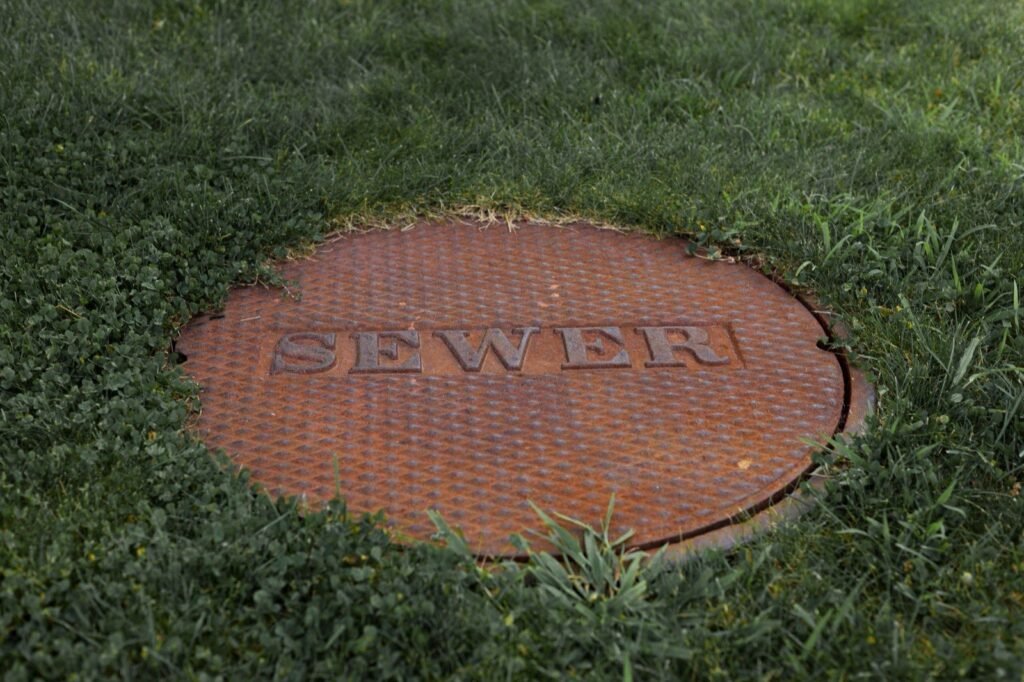
We go in through a cleanout, a capped pipe into the sewer line, usually outside near the foundation; GSWSA’s standards add one at the property line on newer connections. No usable cleanout? We can pull a toilet and work from the floor opening, and adding a sewer cleanout makes later cleanings simpler. See how to find your sewer cleanout.
What happens when you call us for sewer line cleaning
- Tell us what is backing up and whose name is on the water bill. Active sewage backups are scheduled first.
- Get the price before we start.
- Open the line from the cleanout or a pulled toilet with a cable sized to the pipe.
- Run the camera to find the cause and check whether the pipe can take jetting.
- Jet or cut roots if needed, then flush and test the flow.
- Mark any defect on the ground; you get the video and a written summary.
- Quote any repair in writing, itemized.
Every job is done by licensed plumbers and covered by liability insurance.
How much does sewer line cleaning cost?
Angi’s main sewer line clog cost guide (updated October 8, 2026) puts the national average at $380, based on 1,037 verified projects, with most homeowners paying $187 to $572. It lists snaking a main line at $100 to $250 and hydro jetting at $350 to $600, and Angi’s camera inspection guide (updated July 9, 2026) lists $250 to $400 for a 50- to 100-foot line.
These are national figures, not Grand Strand quotes. Your price depends on access, line length and what is in the line, and you get it before we start. Repair prices are in our sewer line replacement cost guide.

How often should a sewer line be cleaned?
There is no standard interval; it depends on what the camera shows. A sound PVC line may never need routine cleaning, while roots at known joints, heavy kitchen grease or a belly may call for scheduled cleaning until the cause is repaired. Schedules quoted online are rules of thumb. We set the interval from how fast buildup returns on video, and if cleaning bills keep adding up, compare them with a permanent repair.
How to prevent repeat sewer line clogs
- Grease goes in the trash, not the drain. GSWSA suggests mixing used oil with unscented cat litter, sawdust or sand before tossing it (scented litter can react with oil and start a fire), or recycling it at one of Horry County’s recycling centers.
- Only toilet paper goes in the toilet. In a rental, add a bin and a note in each bathroom; 48.3% of North Myrtle Beach’s housing units are seasonal or recreational (Census Bureau, ACS 2020-2024), so many lines serve guests.
When sewer line cleaning is not enough
Cleaning clears a clog; it does not fix broken pipe. If the line clogs again within weeks, or the camera shows a collapse, a belly, offset joints or flattened Orangeburg, it needs a repair:
- Spot repair: one small dig, or a point liner, fixes a single bad section.
- CIPP lining: a resin liner cured inside pipe that still holds its shape seals cracks and root-prone joints.
- Pipe bursting or sewer line replacement: new pipe for a collapsed, sagging or failing line.
Clearing a stoppage needs no permit under South Carolina’s 2021 residential code, but replacing concealed pipe is new work that needs a permit and inspection. We pull the permit, schedule the inspection and request SC811 locates. Compare the options on our page about sewer line repair in Myrtle Beach.
What a complete written repair quote includes
If the camera finds damage, a complete written quote lists:
- Camera findings and video, with the distance to each defect
- The method and why it fits your line
- Length, depth and the new pipe material
- Permit and inspection
- SC811 locates, plus locating your private line
- Restoration of the yard, driveway or sidewalk
- Cleanouts added
- Disposal of old pipe and debris
- Any utility fees
Sewer line cleaning FAQ
How much does sewer line cleaning cost?
Angi’s main sewer line clog guide (updated October 8, 2026) puts the national average at $380, with most homeowners paying $187 to $572. We give you your price before we start.
What is the difference between drain cleaning and sewer line cleaning?
Drain cleaning clears one fixture’s branch pipe, such as a kitchen sink line. Sewer line cleaning clears the main pipe that carries all of the home’s waste to the public sewer.
Is snaking or hydro jetting better for a main sewer line?
Snaking opens most clogs and comes first. Jetting scours grease, sand and fine roots off the whole wall, so it suits a line that keeps clogging, if the camera shows the pipe can take it.
How often should a sewer line be cleaned?
As often as the camera shows it needs. A sound PVC line may never need it, while roots, heavy grease or a belly may call for scheduled cleaning until repaired.
Why does my sewer line keep clogging after it is cleaned?
The cause is usually still there: roots regrowing through a joint, grease left on the walls, a belly that refills or a broken section. A camera run after cleaning shows which.
Will GSWSA clear a clog in my sewer line?
GSWSA investigates backups at no charge and fixes problems on its side; in most GSWSA areas the owner’s pipe generally runs from the house to the property line. If the Service Line Maintenance charge is on your bill, call GSWSA first, since that program covers enrolled customers’ lines from the right-of-way to the building.
Who handles a sewer clog in a condo or vacation rental?
Condo buildings often share one main line, and the HOA documents decide who maintains it and who pays, so check them first; GSWSA’s developer policy provides Sewer Service Line Maintenance, for a monthly fee, to multi-unit buildings that share a sewer service line. In rentals, turnover-day backups often trace to guests’ wipes and grease.
Can sand clog a sewer line?
Yes. Sand and silt wash in through cracks and open joints in wet, sandy ground and settle in low spots. Jetting flushes it out, and the camera finds where it gets in.

Sewer or water line trouble?
Call for a camera inspection and a written quote.
Call to schedule sewer line cleaning in Myrtle Beach, Conway, North Myrtle Beach or anywhere in Horry County.

Sewer and water line repair for Myrtle Beach, Conway and Horry County. Camera inspection first, written and itemized quotes, licensed plumbers.
Call (843) 429-6659