
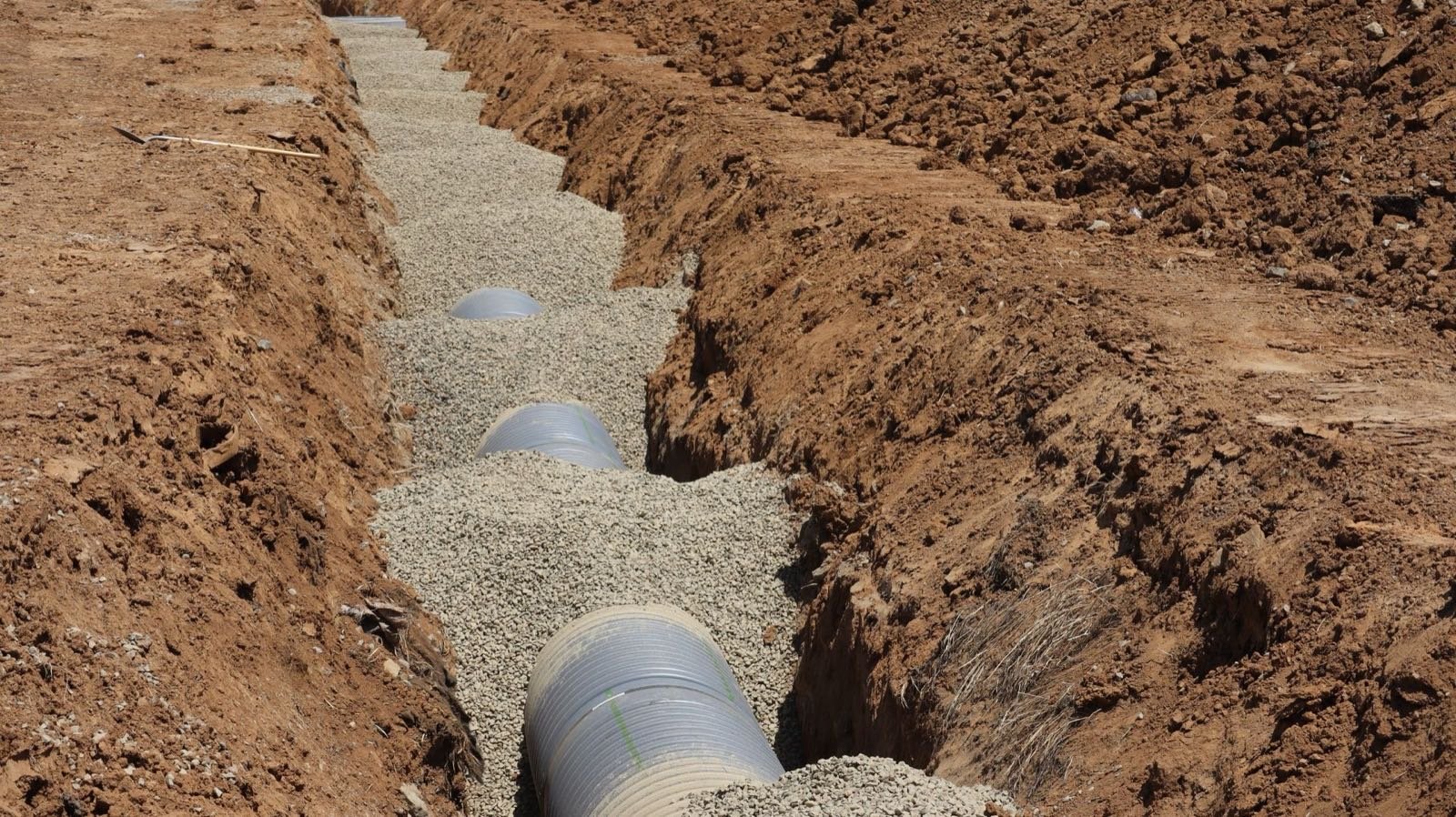
Sewer Line Replacement in Myrtle Beach, SC
Full and partial sewer line replacement, trenchless or excavated, with permits, locates and inspections handled.
- Camera inspection first
- Written, itemized quotes
- Licensed and insured
Sewer line replacement puts new pipe between your house and the utility’s connection, and it is usually the right call when the camera shows damage along the line, not at one spot: a collapse, roots at joint after joint, or sags that hold water. Myrtle Beach Sewer Line Repair replaces sewer lines in Myrtle Beach, Conway and across Horry County, by pipe bursting where the old line allows and by open trench where it does not. We build to your utility’s rules, pull the permit and show you the video before any price.
Call (843) 429-6659 for a camera inspection and a written sewer line replacement quote.
Call nowChoose your area
Who owns the line, which utility to call and which permits apply differ by town. Pick yours:
Signs you need sewer line replacement
| Symptom | Likely cause | What we do |
|---|---|---|
| Clogs return weeks after every cleaning | Roots or offset joints along much of the run | Film the line and price lining, bursting and replacement side by side |
| The camera cannot pass one spot | A collapsed or crushed section | Mark it, then dig out that section or replace the run |
| Standing water and sand in the pipe | Bellies where pipe sank in soft ground | Re-lay the low stretch on stone at the right slope |
| Rust scale or holes in metal pipe | Corroded cast iron | Replace the run, or line it if the walls are still sound |
| Flattened or blistered pipe | Orangeburg fiber pipe failing with age | Replace it by bursting or open trench |
| A sunken, soggy strip of yard | A break washing out the sand around the pipe | Locate the break with the camera and replace that section |
A sewer camera inspection tells these apart, and you keep the video.
When does sewer line replacement beat repair?
Replacement usually beats repair when the problems are spread along the line: defects at several joints, a collapse, more than one belly, or a pipe material failing everywhere at once. One defect in otherwise sound pipe is normally a spot repair or point liner, covered under sewer line repair in Myrtle Beach.
- Several defects. Each spot repair is another dig, so a line with bad joints throughout often costs less to replace once.
- Collapse or sags. Nothing passes a crushed section, and no liner lifts a belly. Both mean digging.
- Failing material. Vitrified clay and cast iron were common in older homes, and Orangeburg fiber pipe was commonly installed from the 1940s to the early 1970s; see Orangeburg pipe and cast iron sewer pipe.
The U.S. Census Bureau (ACS 2020-2024) counts 56.1% of homes in Loris, 32.3% in Conway and 27.8% in Myrtle Beach as built before 1980, against 1.1% in Carolina Forest. See why sewer lines fail on the Grand Strand for the local causes.

Full or partial sewer line replacement?
Partial replacement fits when the camera shows one bad stretch with sound pipe on both sides, such as a collapse under a driveway or root-filled clay near the house. Full replacement makes sense when the damage, or a failing material like Orangeburg, runs the whole length.
Ownership sets the limits: in most GSWSA areas the owner’s pipe generally ends at the property line, so the job usually stops there; in the cities, ask where the utility’s part ends. If the camera puts the defect on the utility’s side, we tell you so you can report it. Where new pipe meets old, GSWSA’s standards allow no rubber couplings on new laterals, so we confirm the fitting your utility accepts.
Trenchless or open trench sewer line replacement?
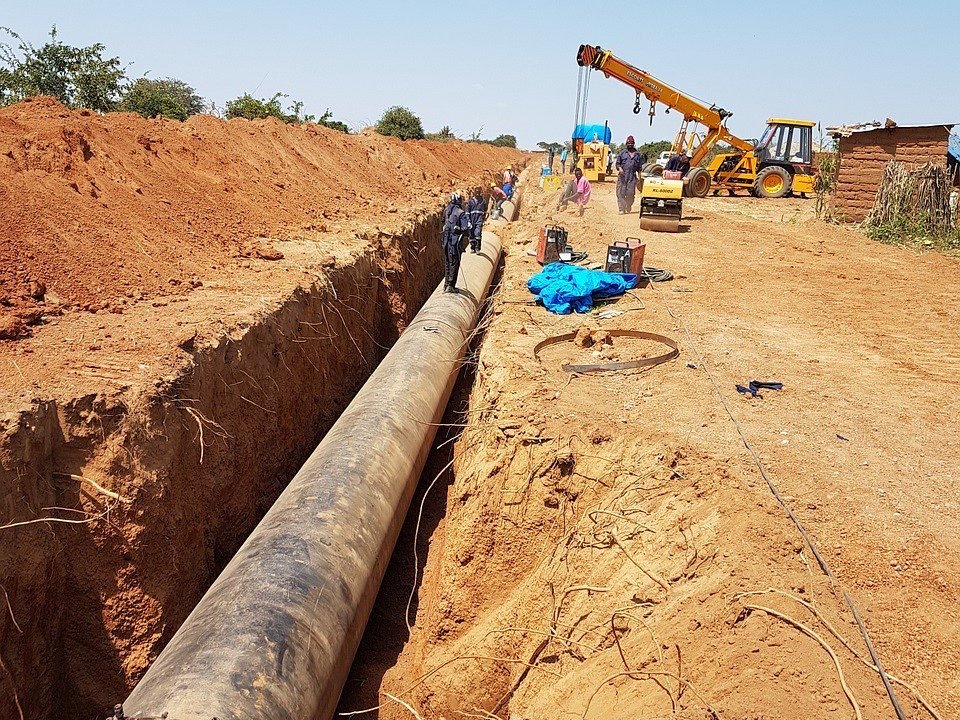
It depends on what the camera shows and what sits over the line. Pipe bursting replaces cracked or broken pipe through two small pits, lining renews pipe that still holds its shape, and open trench fixes what neither can: a collapse with no path through it, a belly, a wrong slope or a new route.
- Pipe bursting pulls in new HDPE pipe as a bursting head breaks the old pipe outward. See pipe bursting.
- Lining (CIPP) cures a resin liner inside the cleaned pipe, usually from a cleanout. See sewer pipe lining.
- Open trench re-lays the line in new Schedule 40 PVC on a stone bed, and it is the only method that corrects slope.
See trenchless sewer repair for when no-dig methods will not work.
High water, sand and muck
NRCS soil data put the water table within 2 feet of the surface on about 79.5% of Horry County’s mapped acreage for part of the year, while GSWSA sets new laterals 36 inches to 4 feet deep. Many trenches here reach water.
Dewatering commonly means a pump in a sump at the low end of the trench, and sometimes well points around a deep dig; GSWSA’s standards for sewer installations require trenches to be kept free of water while pipe is laid. Wet sand caves easily, so walls are braced or sloped under OSHA rules. Where a trench hits muck, quicksand or swampy ground, GSWSA calls for replacing it with gravel or crushed stone no larger than 3/4 inch, at least 4 inches deep under the pipe, which keeps the new line from settling into a fresh belly.
What does GSWSA require for the pipe on your side?
For the private part of the line, beyond the right-of-way or property line, GSWSA’s Sewer System Standards (July 2026) call for Schedule 40 PVC (or DWV) pipe, no rubber couplings and cleanouts at set points. In GSWSA areas, we build open-trench replacements to that standard and check with GSWSA before bursting in HDPE.
- Pipe: Schedule 40 PVC or DWV; a single house normally takes a 4-inch line.
- Cleanouts: at most every 75 feet on straight runs, at bends greater than 45 degrees, 5 feet from the building and at the property line.
- Inspection: pipe bedded to grade and backfilled to two-thirds of its height first.
South Carolina’s edition of the 2021 International Residential Code adds a cleanout within 10 feet of where the building drain meets the building sewer and allows a wider range of pipe, including ABS, PVC SDR 35, cast iron and vitrified clay. Outside GSWSA areas, we follow the city’s or GCWSD’s rules.
Do you need a permit to replace a sewer line?
Yes. Under South Carolina’s 2021 residential code, replacing defective concealed sewer pipe with new material is new work that needs a permit and an inspection, even in an emergency, while clearing a stoppage or stopping a leak needs no permit at all. After an emergency repair, the application is due by the next working business day.
- Unincorporated Horry County (Socastee, Carolina Forest, Forestbrook, Garden City, Little River, Longs): generally Horry County Code Enforcement.
- Cities and towns generally issue their own. North Myrtle Beach also requires a city Trade Certification for plumbers, Loris lists a 10-business-day minimum turnaround, and Briarcliffe Acres requires town approval before the Horry County permit.
- Murrells Inlet: Georgetown County, where an $8,000 job carries a $75.50 permit fee before any plan-check fee.
Work over $500 needs a state-licensed plumber, though owner-occupants may do their own. We request SC811 locates, which utilities have 3 full working days to mark; SC811 skips private lines, so we trace yours with the camera.
What happens when you call
- Utility first if sewage is backing up. GSWSA’s rule is “Call GSWSA before you call your plumber,” and its check costs nothing: (843) 234-8460, or (843) 443-8200 after hours. City and GCWSD customers call their utility.
- Camera and locate. We film the line and mark its route and depth.
- Written options, itemized for each workable method; nothing starts until you approve.
- Permit and SC811 locates.
Sewer line replacement day, step by step
- Set up. We check the utility marks and cut sod, pavers or concrete as quoted.
- Drains off. You stop using water while the old line is disconnected, and we tell you when.
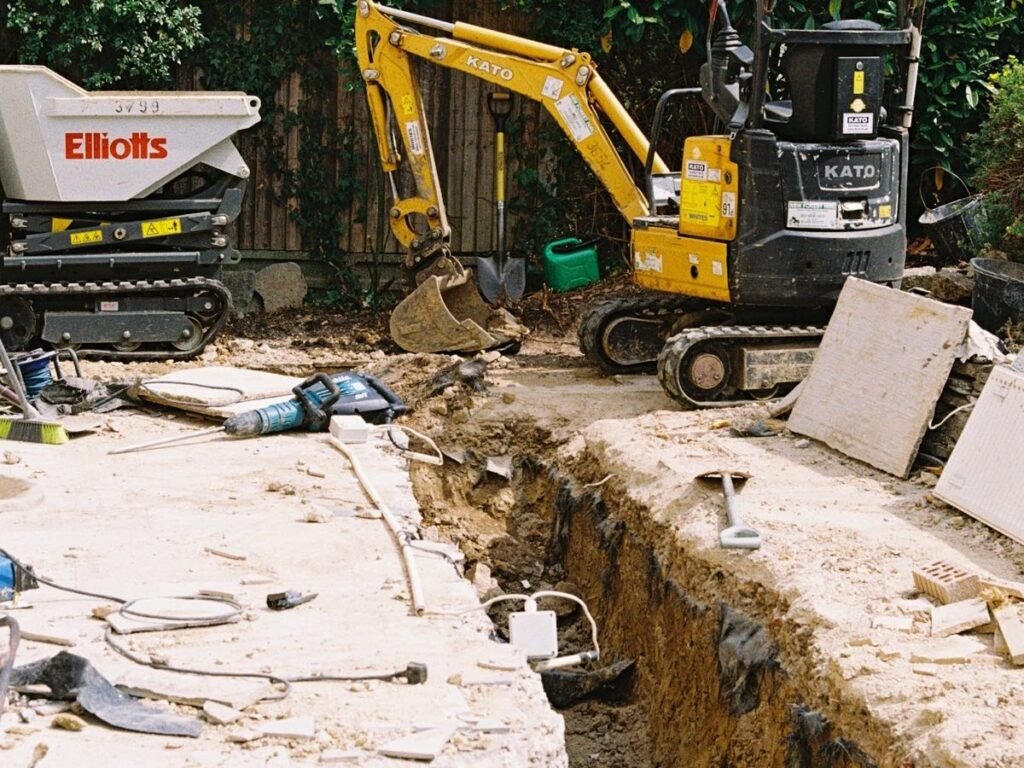
- Open the ground: a trench, or a pit at each end for bursting, pumped down and braced as needed.
- Replace. Old pipe comes out or is burst apart, soft ground is swapped for stone, and new pipe goes in at the right slope with cleanouts set.
- Inspection of the pipe on its bedding, before it is buried.
- Camera check. You get video of the new line.
- Backfill and restore in compacted layers, as quoted.
Every job is done by licensed plumbers and covered by liability insurance.
Restoring your yard, driveway and sidewalk
Restoration belongs in the quote, line by line: who replaces sod, concrete, pavers, irrigation and plants. For comparison, GSWSA’s standards for sewer installations call for backfill tamped in 6-inch layers up to 24 inches above the pipe and 95% compaction under pavement, so a trench does not sink later. Bursting and lining disturb far less ground.
How much does sewer line replacement cost?
Angi’s sewer line cost guide (updated August 3, 2026) puts the national average for sewer line replacement at $3,319, with most homeowners paying $1,388 to $5,323. Those are national estimates, not Grand Strand quotes; your price depends on length, depth, method and what has to be rebuilt, and you get it in writing after the camera.
The same guide lists replacement at $50 to $250 per linear foot including materials and labor, excavation at $50 to $200, trenchless work at $60 to $250, and a cracked-pipe spot repair at $600 to $1,050. Locally, pumping groundwater, stone bedding, cleanouts, permits and anything over the line add their own lines. Our sewer line replacement cost guide breaks them down.
Insurance rarely pays for worn-out pipe; national insurers say home insurance typically does not cover service line failures without optional coverage. GSWSA customers enrolled in its Service Line Maintenance program ($2.85 a month for water and sewer) have their lines covered from the right-of-way to the building. See sewer line insurance in Myrtle Beach.
What a complete written quote includes
- Camera findings and video, with the distance to each defect
- The method and why it fits
- Length, depth and pipe spec, such as Schedule 40 PVC
- Permit and inspection
- SC811 locates, and locating of your private line
- Dewatering, bracing and stone bedding if needed
- Restoration of yard, driveway or sidewalk
- Cleanouts added
- A backwater valve, where the code requires one
- Disposal of old pipe and soil
- Any utility fees
Sewer line replacement FAQ
How long does sewer line replacement take?
Site work on a typical house line often takes one to three days, longer with deep pipe, heavy groundwater or concrete. Permits come first, and SC811 gives utilities 3 full working days to mark their lines.
Can I replace only part of my sewer line?
Yes, when the camera shows sound pipe on both sides of the bad section. The quote should show how the new pipe joins the old and any cleanout added there.
What is the cheapest way to replace a sewer line?
Often replacing only the failed section. For a full run under open lawn, a trench can be the lowest price; pipe bursting tends to cost less in total when a driveway, patio or trees sit over the line.
Is PVC better than cast iron for a sewer line?
PVC is the usual choice here: it does not rust, and GSWSA calls for Schedule 40 PVC beyond the property line. Lifespan estimates vary: This Old House (April 2026) says PVC lasts over 100 years and cast iron 75 to 100, while InterNACHI’s chart lists PVC and ABS waste pipe at 50 to 80 years and buried cast iron at 50 to 60.
Who pays to replace the sewer line between my house and the street?
In most GSWSA areas, the owner generally pays for the pipe from the house to the property line, and GSWSA for its lateral from there to the main. GCWSD makes Murrells Inlet owners responsible from the home to the property line; city customers should ask their city.
Does homeowners insurance cover sewer line replacement?
Usually not. One insurer’s guide says most sewer line damage comes from causes a standard policy excludes, tree roots included, though optional service line coverage exists. GSWSA Service Line Maintenance members should call GSWSA first.
Should I add a cleanout when the sewer line is replaced?
Yes, if the line lacks one where your utility requires it, such as GSWSA’s cleanouts at the property line and 5 feet from the building. Adding one while the ground is open usually costs far less than digging later.
Sewer or water line trouble?
Call for a camera inspection and a written quote.
Call for sewer line replacement in Myrtle Beach, Conway or anywhere in Horry County.

Sewer and water line repair for Myrtle Beach, Conway and Horry County. Camera inspection first, written and itemized quotes, licensed plumbers.
Call (843) 429-6659