
Orangeburg Pipe and Cast Iron Sewer Pipe in Myrtle Beach Homes: How They Fail and What Replaces Them
Orangeburg pipe and cast iron sewer pipe: how each fails, what lifespan sources say, and how to tell what is under a Grand Strand home.
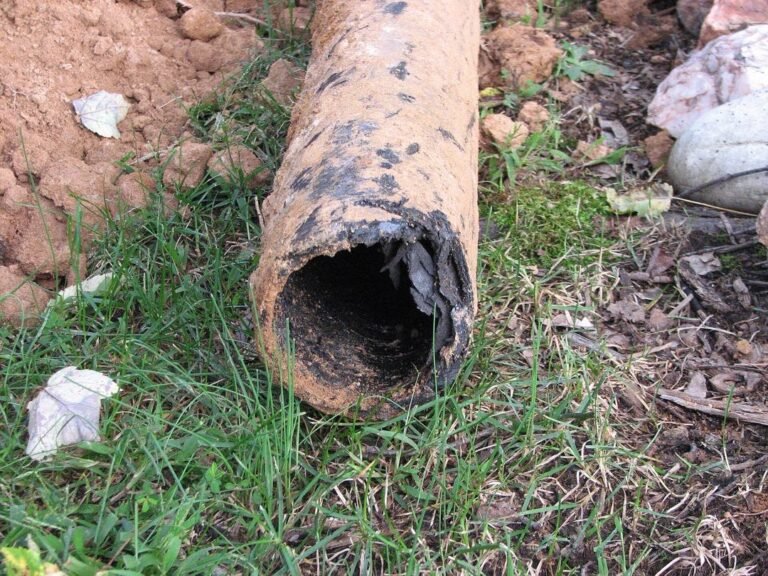
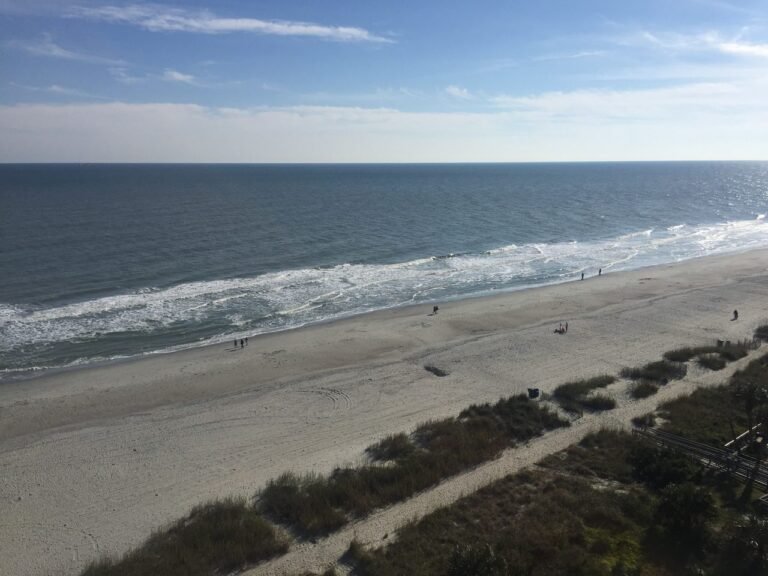
Photo: thurdl01 (Flickr), CC BY 2.0, via Wikimedia Commons
Orangeburg pipe is bituminized fiber sewer pipe, commonly installed from the 1940s to the early 1970s, and it tends to soften, flatten and eventually collapse. Cast iron is far stronger but corrodes, building scale inside and, in corrosive soil, losing metal outside. Census build years suggest Grand Strand homes old enough for either are most common in Atlantic Beach, Briarcliffe Acres, Loris, Surfside Beach, Conway and Myrtle Beach, and Myrtle Beach Sewer Line Repair confirms what is actually in the ground with a camera before quoting any repair.
Call (843) 429-6659 to book a camera inspection and learn which pipe runs under your yard.
Call nowSewer pipe materials at a glance

Residential sewer lines are usually one of these six materials, and an older line can switch materials partway to the street.
| Material | When it was common | Typical failure |
|---|---|---|
| Orangeburg (bituminized fiber) | About the 1940s into the early 1970s | Softens, bulges, squashes oval and caves in |
| Cast iron | Older homes, often near the house | Rust scale, outside corrosion, cracks, a worn floor |
| Vitrified clay | Older homes | Root intrusion and shifted joints; cracks |
| ABS (black plastic) | Plastic-era homes | Joints that let go; cracks |
| PVC (SDR 35 or Schedule 40) | Newer building sewers | Seldom the pipe: sags, pulled joints, digging damage |
| HDPE (fused black plastic) | Replacement lines, mostly from pipe bursting | Few weak points; can sag on a soft bed |
What is Orangeburg pipe?
Orangeburg is the common name for bituminized fiber pipe, by most accounts pressed wood fiber saturated with coal tar pitch. Cheap and easy to handle, it was commonly installed in house sewers from the 1940s to the early 1970s.
Buried fiber pipe slowly gives under the soil’s weight: the wall bulges, the pipe squashes toward an oval, and eventually a section caves in. Roots work into the softened wall and the narrowed pipe snags paper, so slow drains and repeat clogs often come first.
This Old House’s sewer line repair guide (updated April 10, 2026) says Orangeburg pipes last around 50 years, and the City of San Luis Obispo’s utility in California calls Orangeburg “almost impossible to maintain.” Any Orangeburg line laid in that era is now more than 50 years old.
How to identify Orangeburg pipe
- What it looks like: a dull, dark, layered wall, sometimes peeling, bulging or pinched. Black ABS, by contrast, is shiny, rigid and evenly round.
- When the house was built: the 1940s through the early 1970s; some homes that age have cast iron near the house and fiber pipe farther out.
- What the camera sees: a dark, layered wall that looks pinched or wavy, often with roots poking in. The fiber section usually lies under the yard, so video is how most owners find out.
Cast iron sewer pipe: how it fails
Cast iron is dense, heavy pipe, common in older homes near the house. Its weakness is rust: scale narrows the bore and catches waste, flat runs can corrode along the bottom until the pipe floor cracks while the crown looks sound, and corrosive soil works on the outside.
That outside corrosion matters here: NRCS rates about 68.8% of Horry County’s soil acreage at high corrosion risk for uncoated steel, a rating that bears on cast iron, though coastal sands such as Leon, Lynn Haven and Lakeland rate low for steel.
The same clog returning at the same distance is a common early warning. Cast iron with plenty of wall left can often be cleaned of scale and lined; pipe that has lost too much metal is replaced.
Clay, ABS and PVC sewer pipe
Vitrified clay comes in short fired lengths, each pushed into the flared end of the next. The clay resists corrosion; the many joints are the weak spot. Roots find them, settling knocks them out of line, and the Georgetown County Water and Sewer District (GCWSD) counts tree roots among the things that can clog service lines.
Groundwater uses the same gaps: NRCS puts the water table within about 1 foot of the surface for part of the year on 56.4% of Horry County’s mapped acreage. More in why sewer lines fail on the coast.
ABS and PVC became the standard for newer building sewers. South Carolina’s 2021 residential code approves ABS, PVC (including SDR 35 and SDR 26), cast iron, concrete, copper and vitrified clay for building sewers, and Grand Strand Water and Sewer Authority (GSWSA) standards require Schedule 40 PVC (or DWV), with no rubber couplings, on new laterals beyond the property line.
How long do sewer pipes last? What the sources say
Published lifespans disagree by decades, so treat them as rough context and judge your own line by its condition.
| Material | This Old House (April 10, 2026) | InterNACHI life expectancy chart | City of San Luis Obispo utility (California) |
|---|---|---|---|
| Cast iron | 75 to 100 years | 50 to 60 years below ground | 30 to 50 years |
| Vitrified clay | Up to 100 years | No figure | 50 to 60 years |
| Orangeburg | Around 50 years | No figure | No figure |
| PVC | Over 100 years | 50 to 80 years (ABS and PVC) | No figure |
This Old House’s clay figure covers clay and cement pipe, InterNACHI is a home inspectors’ association, and San Luis Obispo is a California city. None is specific to the Grand Strand, so we judge a line on camera rather than by its age.
How to tell what your sewer pipe is made of
Three clues, in rising order of certainty: the year the house was built, what the cleanout riser is made of, and a camera run, which is the only one that sees the whole line.
Start with the build year
Homes built before 1980 are old enough for clay, cast iron or Orangeburg; the 1960s and 1970s straddle the end of Orangeburg and the arrival of plastic. Shares by era, from the U.S. Census Bureau’s 2020-2024 American Community Survey:
| Place | Built before 1960 | Built 1960 to 1979 | Built 1980 or later |
|---|---|---|---|
| Atlantic Beach | 13.4% | 48.1% | 38.5% |
| Briarcliffe Acres | 9.6% | 49.3% | 41.1% |
| Loris | 20.1% | 36.0% | 43.9% |
| Surfside Beach | 10.2% | 25.2% | 64.6% |
| Conway | 15.0% | 17.3% | 67.7% |
| Myrtle Beach | 8.5% | 19.3% | 72.2% |
| North Myrtle Beach | 5.1% | 14.2% | 80.7% |
| Forestbrook | 1.3% | 15.5% | 83.2% |
| Socastee | 1.2% | 12.6% | 86.2% |
| Longs (ZIP 29568) | 2.1% | 10.4% | 87.5% |
| Garden City | 1.0% | 10.0% | 89.0% |
| Murrells Inlet | 2.7% | 5.2% | 92.1% |
| Little River | 1.0% | 5.4% | 93.6% |
| Carolina Forest | 0.4% | 0.7% | 98.9% |
| Horry County | 4.1% | 11.9% | 84.0% |
The middle and right columns are worked out from the Census shares, and the Atlantic Beach and Briarcliffe Acres figures come from small samples.
Build year is a clue, not proof. No public record we know of shows which Grand Strand homes have Orangeburg, and some older lines have already been partly replaced.
Check the cleanout
The cleanout riser, the capped pipe standing up near the house, gives a quick hint:
- PVC is usually white or green plastic.
- ABS is shiny black plastic; a black riser on a recent replacement may be HDPE.
- Cast iron is heavy, dark and often rusty, with a thick collar at each joint.
- Clay is ceramic, tan to reddish brown.
- Orangeburg may show as dull black pipe with a flaky, uneven surface.
An old line can sit below a new plastic riser. Loosen a cap gradually, leave it closed if drains are backing up, since sewage under pressure can spray out, and keep flames away from sewer gas.
Confirm with a camera
A sewer camera inspection records the whole run, shows where one material joins another and finds the defects that decide the repair. Buying an older home? Read about sewer scope inspection cost before buying a home.
Orangeburg pipe replacement and other repair options
The material and its condition decide the fix: lining for pipe that keeps its shape but leaks at joints, bursting for brittle pipe on a straight run, and excavation for collapses and sags. Our sewer line replacement page compares each method.
- Orangeburg: expect replacement. Squashed fiber pipe makes a poor host for a liner, and heavy cleaning can shred it. Pipe bursting can drag new HDPE through the old route where the bursting head can get through, and any caved-in section is excavated.
- Cast iron: if the wall is still solid, descale it and line it; where it is thin, split or broken, burst it or dig it out.
- Clay: sewer pipe lining seals leaky joints in clay that still holds its shape; cracked runs are burst, and sags are dug up and re-laid.
- ABS and PVC: typically a spot repair of the one bad joint, sag or damaged length.
Replacing buried pipe is new work under South Carolina’s 2021 residential code, so it needs a permit and inspection. We pull the permits and request SC811 locates for public utilities, then trace your private line with the camera’s locator, because SC811 does not mark it. Every job is done by licensed plumbers and covered by liability insurance.
For national context, Angi’s August 3, 2026 sewer line cost guide lists $600 to $1,050 for a cracked pipe spot repair and a $3,319 average for full replacement, with most homeowners paying $1,388 to $5,323. Local price drivers are in our sewer line replacement cost guide, and our main page covers sewer line repair in Myrtle Beach.
Orangeburg and cast iron sewer pipe FAQ
What is Orangeburg pipe?
Bituminized fiber pipe, generally described as pressed wood fiber soaked in coal tar pitch, commonly installed in house sewers from the 1940s to the early 1970s. With age it softens, squashes out of round and can cave in.
How do I know if I have Orangeburg pipe?
Start with the build year: the 1940s through the early 1970s is the window. A dark, layered, out-of-round pipe at a cleanout is a hint, but the fiber section usually runs under the yard, so a camera inspection is how you know for sure.
How long does cast iron sewer pipe last?
Sources disagree. This Old House says 75 to 100 years, InterNACHI’s chart gives 50 to 60 years below ground, and the City of San Luis Obispo’s utility says 30 to 50 years. Soil, scale and use affect yours, so judge it on camera.
Can Orangeburg pipe be lined instead of replaced?
Rarely. A liner needs a reasonably round, solid host pipe, and squashed fiber pipe seldom qualifies, so pipe bursting or excavation is the usual answer.
Do PVC sewer lines fail?
Seldom because of the pipe. Plastic line problems usually trace back to the ground or the installation: a sag where bedding settled, a pulled joint or a digging strike.
Keep reading
Related guides
Why Sewer Lines Fail on the Grand Strand: Water Table, Sand, Storms and Age
Why sewer lines fail on the coast: Grand Strand water tables, sand, corrosive soil, storms and older pipe, and what a camera inspection shows.
Read guide
Sewer Scope Inspection Cost: Should You Get One Before Buying a Myrtle Beach Home?
Sewer scope inspection cost, who should get one before buying a Grand Strand home, and how to negotiate a sewer repair.
Read guide
Sewer Smell in Your House: Causes and Fixes in Myrtle Beach
Sewer smell in your house? Dry traps, wax rings, vents, cleanout caps and cracked pipes, how to check each, and when to call.
Read guidePhoto credits (Wikimedia Commons): Why Sewer Lines Fail on the Grand Strand: Water Table, Sand, Storms and Age: 28bytes, CC BY-SA 4.0; Sewer Smell in Your House: Causes and Fixes in Myrtle Beach: Elisa.rolle, CC BY-SA 4.0.
Sewer or water line trouble?
Call for a camera inspection and a written quote.
Call to put a camera in your line and see what it is made of, anywhere on the Grand Strand.

Sewer and water line repair for Myrtle Beach, Conway and Horry County. Camera inspection first, written and itemized quotes, licensed plumbers.
Call (843) 429-6659